


Embodied Scientific Intelligence
Robotic experimentalists that observe, hypothesize, and run experiments in the real world.
Backed by Y CombinatorOur Mission
At SuperRadiant, we are building Embodied Scientific Intelligence (ESI).
Our mission is to build general-purpose robotic experimentalists: systems that unite scientific reasoning and physical action to iterate toward discovery by observing, hypothesizing and experimenting.
The Problem

Every instance of intelligence occurring in nature is embodied. Scientific intelligence is no different.
AI has already made remarkable progress in the digital layer of scientific work: reading papers, interpreting procedures, analyzing results, writing code, and even proposing experiments. But the history of science tells us this is not enough.
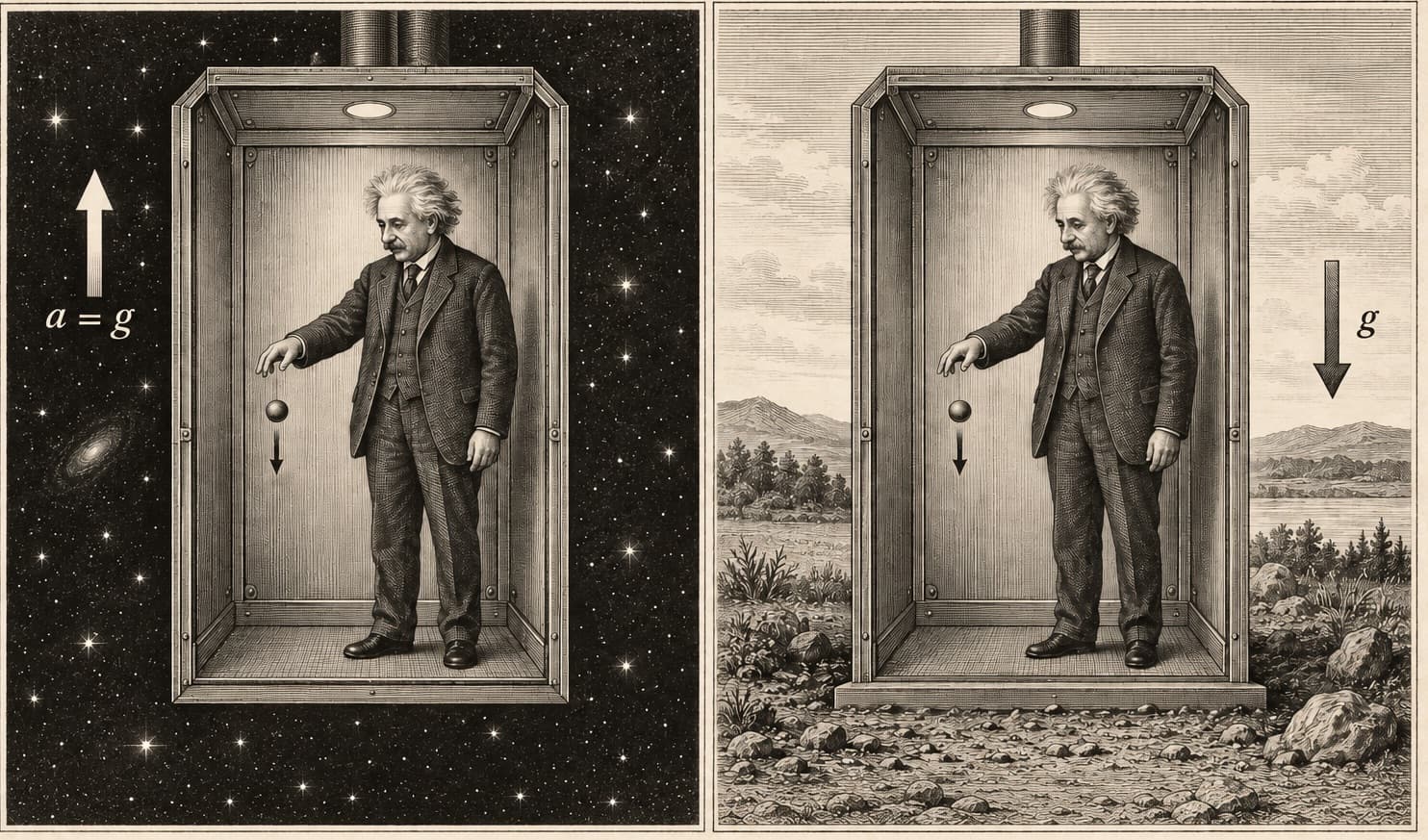
Archimedes discovered the principle of buoyancy not by solving equations, but by stepping into a bath and watching the water rise. Einstein arrived at the Equivalence Principle (cornerstone of General Relativity) through the felt experience of standing in an elevator: the same pull of gravity made physical and immediate in his own body.
Scientific intuition is built through contact with the world. The laws of physics are encoded in our muscle memory long before they are written down as equations. Today's AI has no such contact: it can reason about an experiment, but it cannot run one. If AI can develop a muscle memory of its own, and extend it down to the nanoscale, a new door to scientific discovery is within reach.
The Scientific Method
For centuries, science has advanced through a single loop: (1) observe the world, (2) form a hypothesis, (3) test it with an experiment, and (4) let the result reshape the hypothesis.
1for step in itertools.count():2 observation = observe(world)3 hypothesis = hypothesize(observation)4 result = experiment(hypothesis)5 world = update(world, result)Today, the experiment is the bottleneck. Reasoning has become nearly free: a hypothesis can be drafted in seconds and a thousand variants generated in a minute. Testing them still means hands at the bench. Human researchers close the loop by working long hours on repetitive, exacting procedures, and the loop turns only as fast as they can.
Automation was supposed to fix this. Traditional lab automation solutions can run thousands of experiments without rest, but only when the question is fixed and the workflow is locked down. They excel at high-throughput screening of a known protocol, and they stall the moment the question changes, a new instrument arrives, or a result demands a procedure nobody has written yet. Discovery is exactly that kind of work. And even where they run well, they execute without learning: how the sample behaved, what resisted, what nearly went wrong. That physical intuition never makes it back into the hypothesis.
The loop needs an experimentalist that turns as fast as a machine and adapts as readily as a scientist.
Our Strategy
We are building one holistic system that unites scientific reasoning with physical action, so the same system that forms a hypothesis can carry out the experiment that tests it.
R&D is not manufacturing. Protocols change constantly; new discoveries demand new procedures, new instruments, new configurations. So rather than automating a single fixed process, our system retrofits existing workflows, adapts to new ones, and brings the rigor and reproducibility that science demands without sacrificing the flexibility that discovery requires.
The Team
We are scientists, researchers, and engineers with interdisciplinary backgrounds across theoretical, computational, and experimental physics; AI, machine learning, and large language models; and robotics.
We trained at some of the world's leading research institutions, under mentors including a Nobel laureate, and our team comes from Brown, NASA JPL, Fermilab, CERN, and Boston Dynamics RAI. SuperRadiant is backed by Y Combinator (F26).